Economics of AI: Applying Amara’s Law and Technology Strategies for Successful AI Adoption
To curb my excitement and help me remember that we are still on the rise with AI, I went back to my chosen grounding statement during this fourth industrial revolution: Amara’s law.
AUG 26, 2026
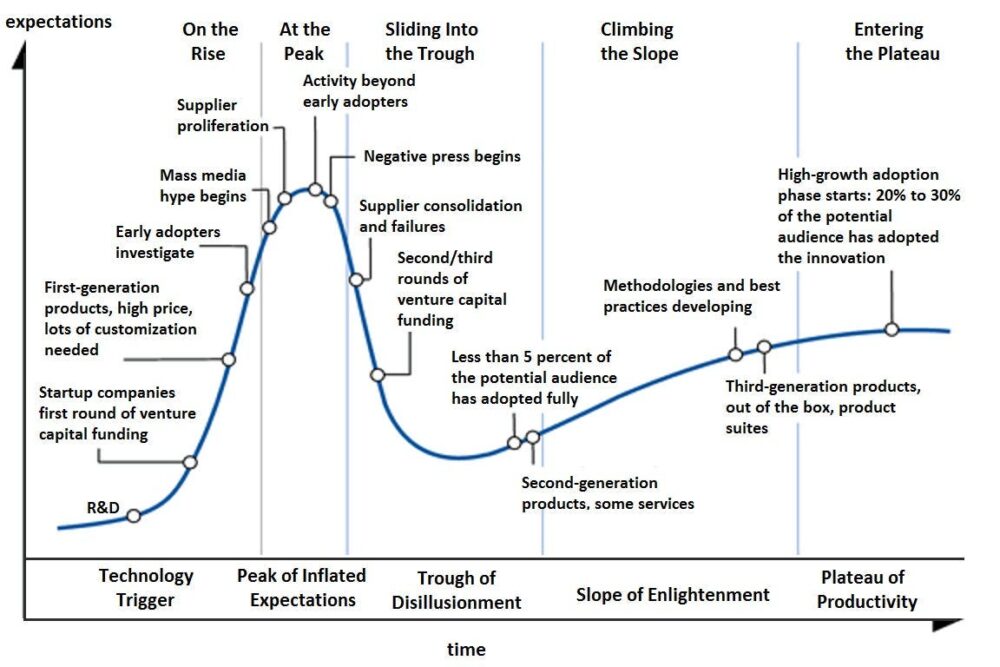
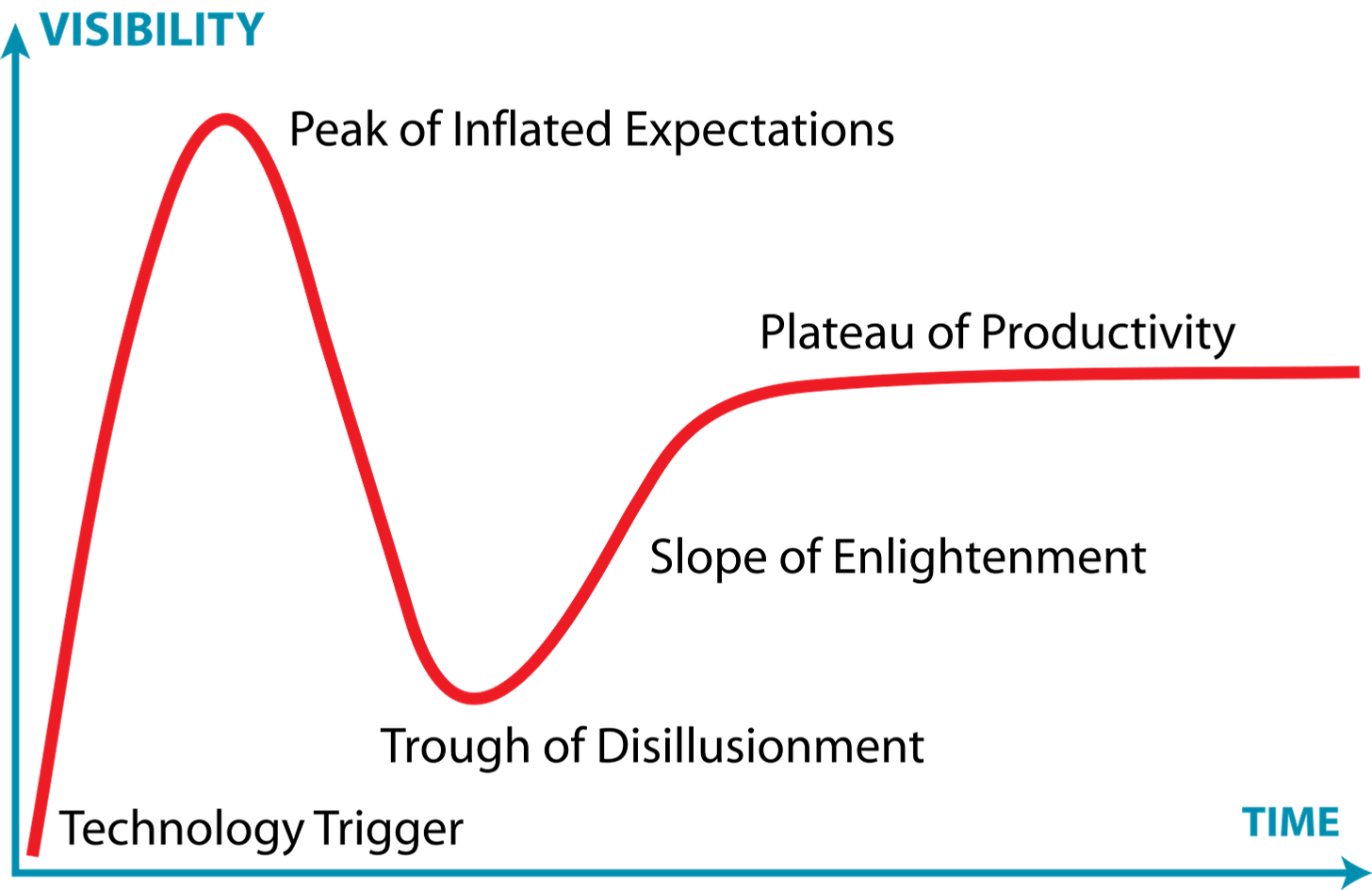
Today, I explore Amara’s Law and the Gartner Hype Cycle, which describe the predictable pattern of technological adoption marked by initial overexcitement followed by temporary disappointment. The Gartner Hype Cycle process has five stages, beginning with a technology trigger and peaking with inflated expectations before falling into a trough of disillusionment, building a framework for applying Amara’s law.
I first heard about Amara’s Law during a lecture on the Economics of Innovation and New Technology at the University of Oklahoma while completing my MBA. I did not know it was an actual law. My professor at the time made the statement, and it wiggled its way into my brain.
Years later, while auditing Madeline Mitchell Stacy new MBA course Foundations in AI Management last night, we discussed AI adoption and its impact on the economy and society as a whole. I was reminded of Amara’s Law as I began to see my own biases exposed through open discussion about the future implications of AI.
The University of Central Oklahoma’s new AI Management MBA Certificate program is the first of its kind in Oklahoma, and I am fortunate to be attending its inaugural semester.
At the conclusion of the second week in an 8-week block course, I wrote down this quote from Roy Charles Amara, an American researcher, scientist, futurist, and Stanford Research Institute professional:
“We tend to overestimate the effect of a technology in the short run and underestimate the effect in the long run.”
This was my balancing act. My brain was firing with excitement and curiosity about the outcomes of artificial intelligence. To curb my excitement and help me remember that we are still on the rise with AI, I went back to my chosen grounding statement during this fourth industrial revolution: Amara’s law.
New technologies almost never go straight from invention to widespread use.
Instead, they usually follow a familiar pattern of excitement, disappointment, learning, and finally practical use. This pattern is known as the hype cycle.
The Five Stages of a Technology Hype Cycle
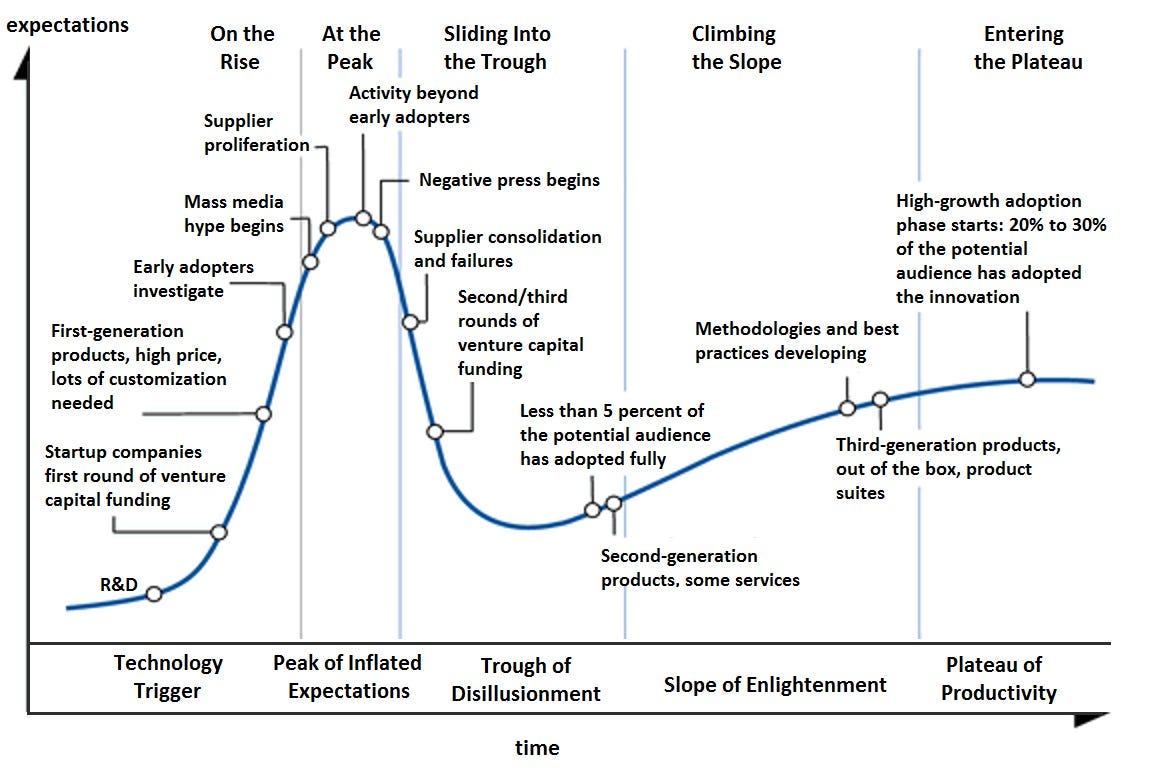
The hype cycle has five main phases in a technology’s life cycle.
- Technology trigger: A possible breakthrough starts the process. For example, when blockchain technology first emerged, early proof-of-concept stories and media coverage created a lot of buzz. Usually, there are no usable products yet, and it is not clear if the technology will succeed in the market.
- Peak of inflated expectations: Early publicity leads to some success stories, such as initial successful blockchain-based fundraising projects, but there are also many failures, like start-ups promising disruptive applications that quickly folded due to technical or legal challenges. A few companies get involved during this phase, taking risks in hopes of early gains, while most stay on the sidelines and observe the evolving landscape.
- Trough of disillusionment: Interest drops when experiments and projects do not meet expectations. For example, during blockchain’s early development, numerous initial coin offerings (ICOs) failed to deliver on their promises, resulting in the exit or collapse of several blockchain startups. Investment only continues if the remaining companies can improve their products enough to satisfy early users.
- Slope of enlightenment: People are seeing clearer examples of the technology’s benefits; for instance, with blockchain, practical uses such as secure supply chain tracking and transparent financial transactions are becoming more apparent. Technology providers release improved second- and third-generation products that address earlier limitations. More companies try pilot projects based on these advancements, but cautious businesses still wait and observe before committing significant resources.
- Plateau of Productivity: Mainstream adoption begins to grow. It becomes easier to judge which providers are likely to succeed. The technology proves its value in the wider market. If it appeals to more than just a small group, it will keep expanding.
For business leaders, the main takeaway is clear: hype does not equal value.
The most important question is not, “Is this technology exciting?” but, “What problem can it solve in a reliable, cost-effective, and scalable way?”
When it comes to Artificial Intelligence (AI), businesses should avoid getting caught up in hype or skepticism. Instead, they should rely on expert analysis and take a long-term view when deciding how to invest in AI for business efficiency.
For example, many retail companies use AI-powered recommendation systems. At first, the results might seem disappointing, but as these systems use more data and better algorithms, they can greatly boost customer engagement and help businesses grow over time. There are many use cases across all industries.
AI technology is here to stay, but understanding its impact takes careful analysis and planning. Business leaders are encouraged to adopt a strategic, long-term perspective rather than react to short-term trends. Knowledge of this cycle helps organizations navigate the transition from a novel invention to a reliable, mainstream tool.
Economics of AI: Applying Amara’s Law and Technology Strategies for Successful AI Adoption by John McLearen
To curb my excitement and help me remember that we are still on the rise with AI, I went back to my chosen grounding statement during this fourth industrial revolution: Amara’s law.Read on Substack