
The Economics of AI: A Token For Your Thoughts
As AI and data-center investment dominate boardroom conversations, organizations need a practical vocabulary for evaluating what they are buying.
SEP 04, 2026
By day, I help organizations modernize building operations through connected technologies, automation, HVAC optimization, digital platforms, and lifecycle service strategies. At night, I teach Managerial Economics to MBA students at the University of Central Oklahoma.
Somewhere between those two roles, I also build and manage AI agents—enough of them that Replit recently informed me I am among its top 1% of users. That is not a victory lap. It is a reminder of how early this field still is.
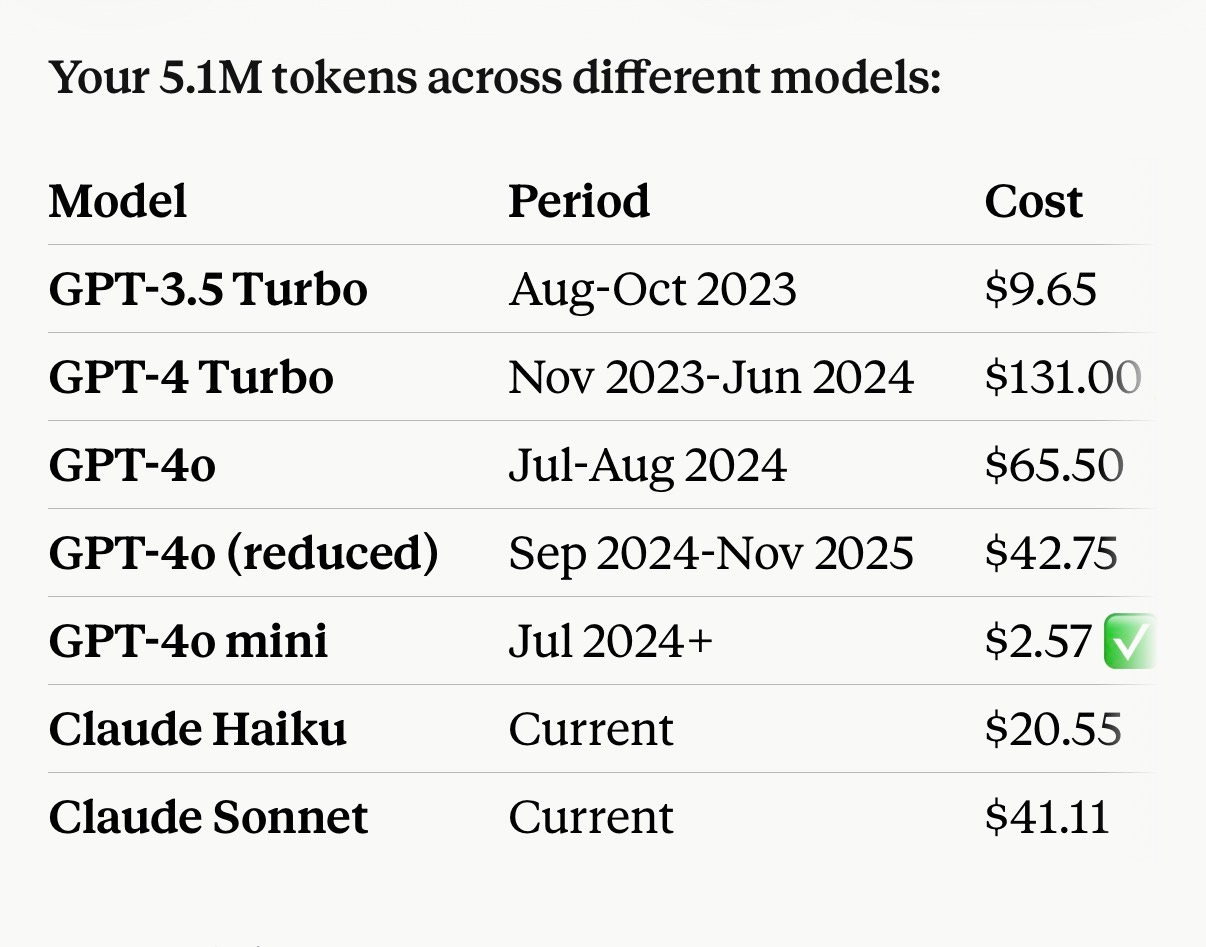
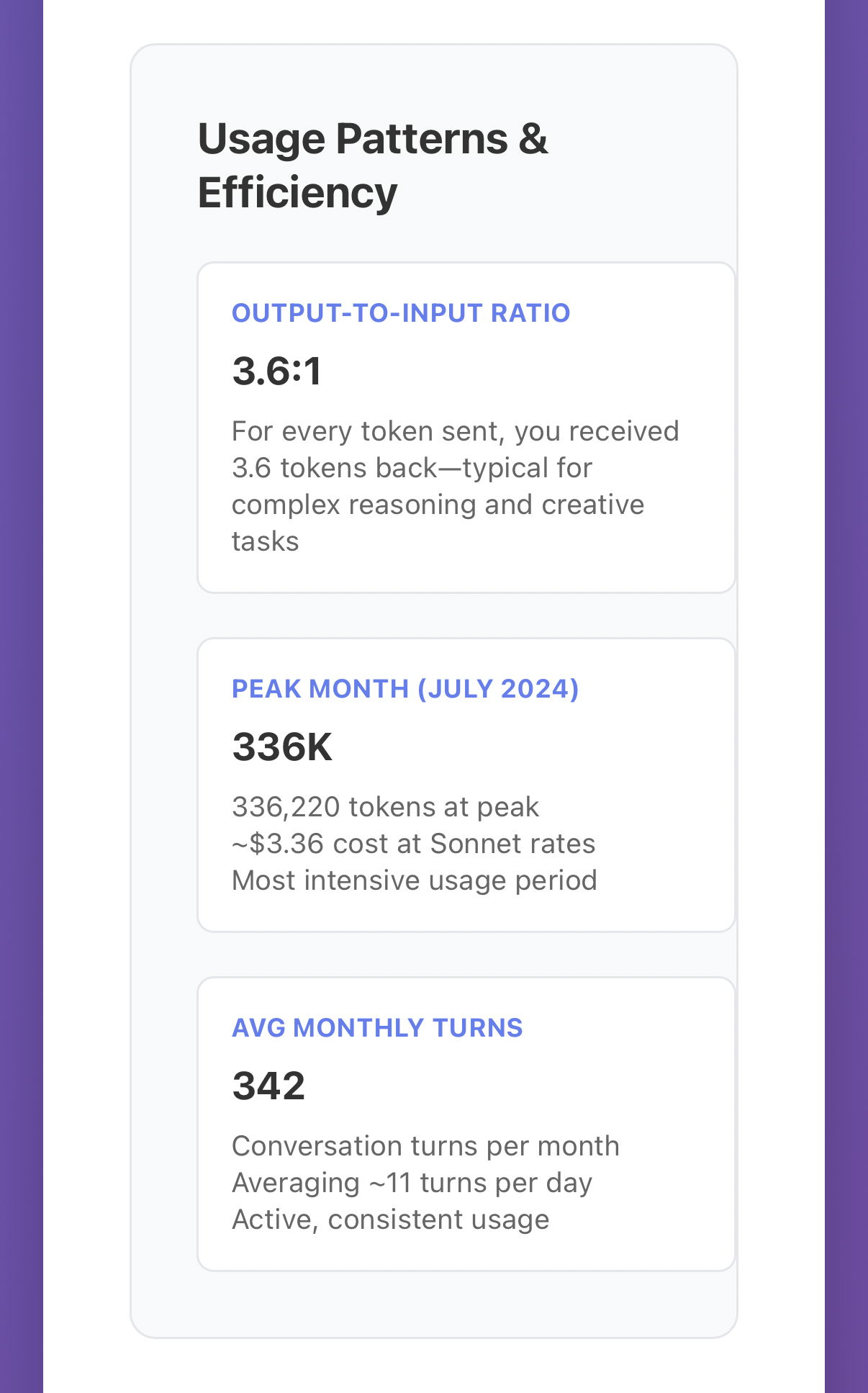
I have used more than 5 million AI tokens since opening my first paid OpenAI account in August 2023. Yet across buildings, classrooms, and AI systems, I keep arriving at the same basic question: What did we get for what we spent?
As AI and data-center investment dominate boardroom conversations, organizations need a practical vocabulary for evaluating what they are buying. It begins with a concept that is easy to count but easy to misunderstand: the token.
Tokens Are the Meter
Tokens are the units AI models use to read, process, and generate language. In ordinary English, a token averages roughly four characters or about three-quarters of a word, though the actual count varies by model and tokenizer.
Think of tokens as kilowatt-hours.
For a decade, I worked in mechanical rooms and on energy-engineering projects involving automation, measurement, and verification. I cannot recall many facility engineers who knew their building’s annual electricity consumption from memory.
They knew something more important: whether the operating rooms would be ready for surgery.
Would they meet ASHRAE/ASHE Standard 170 requirements? Would the space maintain the right temperature, humidity, ventilation, pressure relationships, filtration, and reliability?
A kilowatt-hour was never the mission. It was a measure of an input—and a constraint on the cost of delivering the mission.
Energy still mattered. It affected operating budgets, demand charges, carbon exposure, and system design. But it only became meaningful when connected to an outcome: cost per operating-room hour, HVAC energy intensity, peak-demand exposure, or energy savings achieved without compromising patient safety.
AI tokens work the same way.
A token is priced, counted, and capacity-planned. But a token is not value.
The more useful metric is not simply cost per million tokens. It is cost per verified outcome.
When organizations confuse the two, they start optimizing the meter rather than the work.
Tokenization Is Not Neutral
Before an AI model can work with a prompt, document, or dataset, that information must be broken into tokens. This process is called tokenization.
It sounds technical and harmless, but it matters because the metering standard shapes the bill. Just like your electricity meter, gas meter, etc..
Different models use different tokenizers. The same paragraph may produce different token counts across providers. Vendors also price inputs and outputs separately, with output tokens often costing more because the model must generate them sequentially.
A real AI workload may also include:
- Input-token charges
- Output-token charges
- Cached-input pricing
- Context-window tiers
- Batch-processing rates
- Reasoning tokens
- Tool calls and retrieval
- Reliability and service-level options
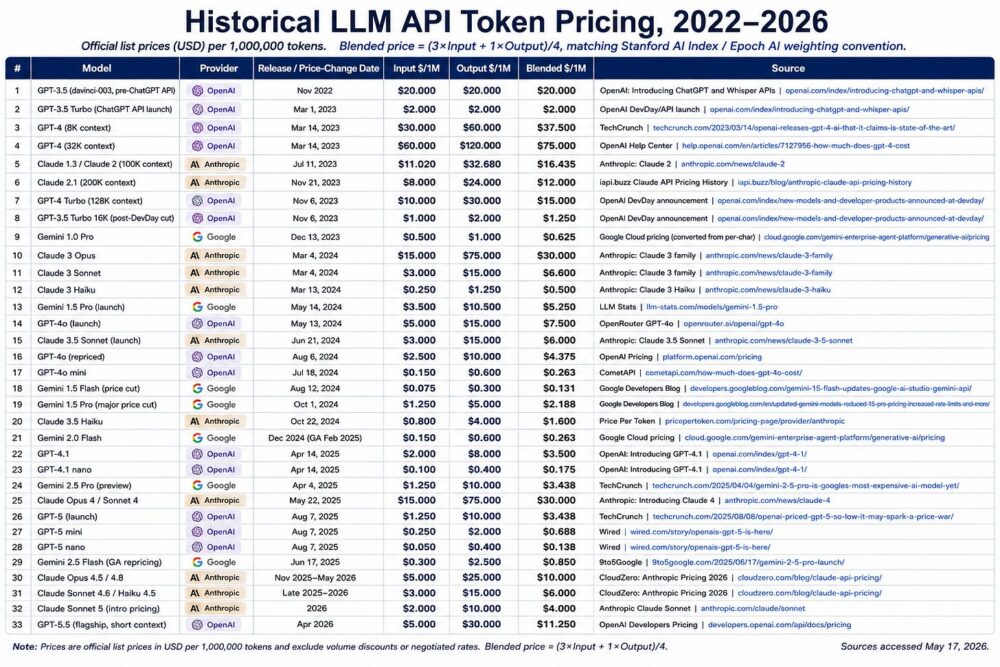
Stanford’s AI Index, for example, benchmarks token pricing using a weighted blend of input and output prices. That is reasonable for broad comparisons, but it may not represent your workload, your model mix, or your usage pattern.
Anyone who has evaluated an electric tariff understands the problem. A single electricity rate can be technically correct but operationally incomplete without demand charges, time-of-use periods, riders, and load factors.
“Price per million tokens” has the same limitation.
A cost comparison that does not identify the model, separate input from output, disclose token counts, or state workload assumptions is not really a comparison. It is a marketing number.
Two measures matter more:
Workload cost=(input tokens×input rate)+(output tokens×output rate)+other chargesCost per verified outcome =accepted, completed outcomes \ AI cost + human review cost
That second measure is where management attention belongs.
Falling Prices Can Raise Spending
AI costs have fallen dramatically. Stanford HAI reports that the cost of querying a model with GPT-3.5-level performance on MMLU fell from roughly $20 per million tokens in November 2022 to $0.07 by October 2024—a decline of more than 280 times. (Stanford HAI)
But cheaper AI does not necessarily mean lower AI spending.
Managerial economics gives us the explanation: when an input becomes cheaper, people often find more uses for it. Lower unit costs can expand demand enough that total spending rises.
William Stanley Jevons recognized this dynamic in The Coal Questionin 1865. More efficient steam engines did not necessarily reduce coal consumption. By making power cheaper, they enabled new uses for power—and often increased total demand.
AI is likely following the same pattern.
As token prices decline, organizations will not simply run the same workflows at a lower cost. They will deploy more pilots, agents, automations, search tools, analytics, customer-service workflows, document systems, and decision-support applications.
The question is not whether token consumption will grow. It will.
The question is whether that growth will be intentional.
Tokenomics Is Just Managerial Economics
In crypto, tokenomics generally describes the supply and incentive mechanisms behind a digital asset. In AI, the term should mean something more grounded:
Tokenomics is managerial economics applied to AI consumption.
The relevant concepts are familiar:
- Marginal cost
- Marginal benefit
- Opportunity cost
- Return on investment
- Risk-adjusted hurdle rates
- Capital allocation
Consider a company with 500 employees, each using five million tokens per month at an average token cost of $3 per million.
That produces 30 billion tokens per year. The direct annual token bill is $90,000. Add $150,000 in subscriptions, and the visible annual cost is $240,000.
Now assume employees cost the organization an average of $120,000 annually and AI creates a 1.4% productivity improvement:
500 × $120,000 × 1.4% = $840,000At first glance, that looks attractive.
Then reality arrives: integration, data preparation, governance, security, observability, identity management, exception handling, support, procurement, and human review.
If those costs create a 3× multiplier, the true annual cost rises to $720,000. The project still produces a positive return—but only $120,000 above cost. That may clear the threshold. Or it may not.
A 7% return can look successful until compared with a 10% alternative—or with the organization’s risk-adjusted hurdle rate. Positive ROI is not the same thing as creating the best available value.
The real challenge is usually not the token bill. It is assigning costs honestly.
AI Sustainability Has Three Clocks
AI sustainability is not just about energy use or efficient model selection. It is about whether the economics remain viable over time.
There are three clocks to watch.
First: the adoption J-curve. Productivity may decline before it improves. Organizations pay for both the old process and the new one while employees train, workflows are redesigned, data is cleaned, controls are established, and exceptions are handled manually.
Second: technological obsolescence. The model selected this year may be economically or functionally inferior much sooner than the equipment it supports. The prompts, integrations, governance structures, and operating procedures built around that model can become obsolete along with it.
Third: the hidden-cost multiplier. Pilots often look inexpensive because many costs land elsewhere: security reviews, audit logs, data retention, model monitoring, API reliability, support tickets, and escalation queues. A project that looks compelling on a pilot spreadsheet can look very different at production scale.
Token sustainability means separating transition costs from steady-state costs—and deciding in advance what evidence will prove the investment is working.
TokenOps Means Someone Owns the Bill
TokenOps is the operating discipline for managing AI usage, cost, quality, risk, and outcomes across the enterprise.
It does not require a complicated governance framework. It requires ownership.
In construction and facilities, a utility bill becomes manageable only when someone is accountable for it. AI is no different.
Organizations should treat pilots as purchases of information, not as demonstrations that a model can produce text. Before launching a pilot, document:
- Pilot cost
- Expected cost at scale
- Success metric
- Observation window
- Loss limit
- Human-review requirements
- Decision owner with authority to stop the project
Then establish stage gates at 30, 90, 180, and 365 days. The ability to say no is part of the capability.
What This Means
Pay attention to the development and usage of the 6 key terms mentioned:
- Tokens
- Tokenization
- Token Consumption
- Tokenomics
- Token Sustainability
- TokenOps
Tokens are the meter, not the value. Tokenization is a metering standard, and metering standards are never neutral. Consumption is elastic, so organizations should plan around volume rather than assume lower unit prices will reduce total spending. Tokenomics is managerial economics applied to a new input. Token sustainability involves managing three different clocks. TokenOps is the discipline and authority to decide which workloads deserve to scale.
While working as a program manager delivering energy savings projects from concept to closeout, I watched building owners learn that the cheapest kilowatt-hour is often the one designed out of the load. Enterprises will soon learn a similar lesson about AI. The winners will not necessarily spend less on AI. They will spend more deliberately on compute that is worth buying.